
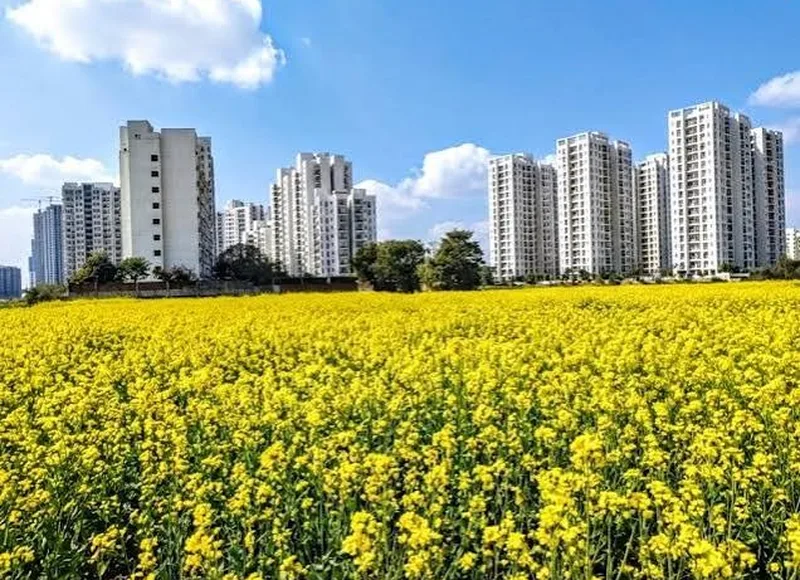
Before Cyber City, there were village lanes. Before luxury high-rises, there were agricultural fields. And before Gurgaon became a symbol of corporate India, it had a life of its own. Imagine a Gurgaon without endless skyscrapers, traffic jams and glowing office buildings, where fields stretched across the landscape, narrow roads connected village homes, and local markets were places where people knew their shopkeepers by name. This was a very different Gurgaon from the one we recognise today.
The area that is now Gurugram has deep roots in rural Haryana. Long before large corporations and modern residential developments arrived, its villages, traditional communities and agricultural economy shaped everyday life. Gurgaon did not begin with its office parks; it grew around communities that had existed for generations. Its transformation accelerated as Delhi expanded and businesses began looking beyond the capital for space to grow. Improved connectivity, real estate development and the growth of the private sector gradually turned Gurgaon into a major corporate and residential destination. The arrival of modern business districts brought new employment opportunities, infrastructure and people from across India, transforming not just the city’s skyline but also the way people worked, travelled, lived and imagined their futures.
Yet, beneath the glass façades and high-rise buildings, traces of the older Gurgaon still remain. Traditional markets, village neighbourhoods and local eateries preserve parts of the city’s earlier identity. The language, food, customs and everyday lives of its long-time residents tell a story that cannot be captured in a photograph of a skyscraper. There is an interesting contrast at the heart of modern Gurgaon: one side is defined by corporate offices, gated communities and global brands, while the other continues to be shaped by village traditions, family-run businesses, local markets and neighbourhood relationships. Neither tells the whole story on its own. To understand Gurgaon, we must look at both the city it was and the city it is becoming.
As Gurgaon continues to expand, it becomes easy to overlook the people and places that existed long before redevelopment. Documenting local histories, preserving heritage and listening to long-time residents can help us understand what urban growth means beyond economic statistics and impressive skylines. The question is not whether Gurgaon should change, because cities inevitably do. The real question is whether, while building its future, Gurgaon can retain a connection to its past. After all, before Gurgaon became a skyline, it was someone’s home.
Want more? Read more of our blogs here.